
Transitioning Your Brand to Sustainable Cannabis Packaging
Sustainable cannabis packaging is no longer a niche request among customers. Notably, more state compliance frameworks are adding post-consumer recycled (PCR) material requirements. Meanwhile, retail buyers have started asking about environmental credentials.
More and more consumers are now paying attention to what happens to packaging after they finish consuming the product. Unfortunately for brands that have not started transitioning toward sustainable cannabis packaging, they are increasingly behind the curve instead of being ahead.
Making that transition does not require rebuilding a packaging program from scratch. For most brands, it means identifying where sustainable alternatives exist, understanding the tradeoffs, and moving incrementally without disrupting compliance or brand presentation. The categories below are the most practical starting points for any operator ready to make the shift.
Start With an Audit of Your Current Packaging
Before making any changes, map out what you are currently using across every product category. List each packaging format, the material it is made from, and whether a sustainable alternative exists. Some formats have direct drop-in replacements. Others require more consideration before switching.
This audit also helps with prioritization. A brand using standard Mylar bags for flower, glass jars for concentrates, and plastic tubes for pre-rolls has three distinct categories to evaluate. Starting with the highest-volume SKU typically produces the most immediate impact. It also gives the brand practical experience with sustainable formats before rolling them out across the full line.
Biodegradable and Recyclable Bag Options
Mylar smell-proof bags are one of the easiest categories to transition. Direct replacements exist without changing the packaging format. Cannaline offers two options for brands moving toward sustainable cannabis packaging.
The biodegradable smell-proof bag is made from all-natural materials, free of heavy metals, and degrades in two years or less. It also carries the same barrier properties and direct print capabilities as a standard Mylar bag. The Low-Density Polyethylene (LDPE) recyclable bag is 100 percent recyclable including the zipper. It releases no harmful chemicals when properly disposed.
Both options support child-resistant (CR) closures and flexographic direct printing. Brands do not have to sacrifice brand presentation to make the switch. Browse Cannaline's full sustainable packaging line to see what is available across formats.
Using Glass as a Sustainable Cannabis Packaging Option
Glass is 100 percent recyclable and can be recycled infinitely without quality loss. For concentrate and flower jar formats, glass is already the premium standard. Its sustainability credentials add another reason to choose it over plastic for brands positioning at the higher end of the market.
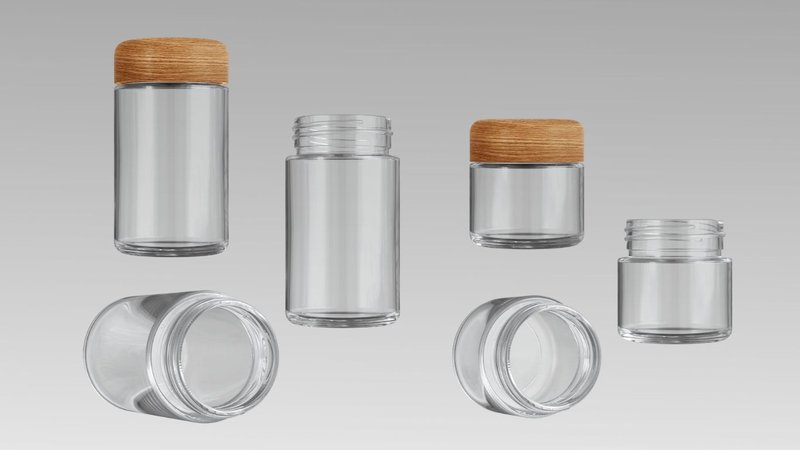
Cannaline's glass flower jars and glass concentrate jars are available with child-resistant lids. For brands currently using plastic jars for cost reasons, comparing the per-unit cost difference against the brand positioning benefit of glass is worth doing before ruling it out entirely.
PCR Material Requirements
Some state compliance boards now require packaging that incorporates post-consumer recycled materials. While specific requirements vary by state, the trend remains consistent across markets. Brands that build PCR-compatible options into their packaging program are now in a better position when those requirements become mandatory.
The EPA's guidance on sustainable materials management provides context on how recycled material requirements fit into federal environmental policy. Cannaline's team can advise on which products in their line meet current PCR requirements across different state frameworks.
Compliance Does Not Change With Sustainable Formats
Switching to a biodegradable or recyclable format does not affect the compliance requirements that apply to the product inside. Child-resistance certification, tamper-evidence, opacity for edibles, and label space requirements all remain the same.
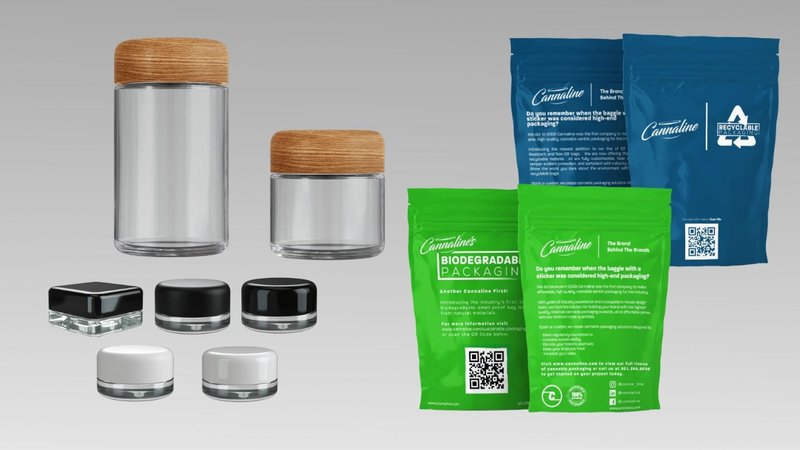
Cannaline's sustainable packaging options meet the same compliance standards as their standard line. Brands do not have to choose between sustainability and regulatory compliance.
Communicating the Change to Sustainable Cannabis Packaging
Sustainable packaging is a brand story worth telling. A brief note on the package about the material, whether biodegradable, recyclable, or made with PCR content, gives consumers information they increasingly want. It also reinforces brand positioning at retail. Keep the language accurate and specific. Vague claims like "eco-friendly" without substantiation create skepticism rather than credibility.
Cannaline's in-house design team can help integrate sustainability messaging into packaging layouts cleanly and accurately. That includes selecting the right language, placement, and format so the message lands without cluttering the design. For brands ready to start the transition, browse Cannaline's sustainable packaging options and request a free quote to get started.