
Using Child-Resistant Blister Packaging for Edible Dosing
Edibles packaging carries more compliance requirements than most other cannabis product categories. Child-resistance, tamper-evidence, opacity, and dosing clarity all have to work together in a single format. Getting any one of those wrong creates regulatory exposure. Getting them all right creates a packaging program that protects consumers and holds up under audit. Child-resistant blister packaging addresses several of those requirements at once.
It’s worth understanding how the safety format works and what compliance standards apply. In addition, cannabis suppliers should know how to evaluate blister options for edible dosing products before placing an order. The sections below cover each of those areas in practical terms.
Why Child-resistant Blister Packaging Works for Edible Dosing
Individual dose blister packaging separates each unit into its own sealed cavity. That creates a clear visual record of how many doses remain in a package. It also prevents accidental ingestion of multiple doses at once, which matters for edibles where tetrahydrocannabinol (THC) potency per unit varies significantly across product types.
For compliance purposes, individual unit separation also supports accurate labeling. Each blister cavity can display dose-specific information alongside the primary packaging label. That helps consumers and budtenders track dosage without opening the full package. It also makes audits and inventory reconciliation easier for dispensary staff.
Kid Safety Standards for Edible Blister Packaging
Child-resistant blister packaging must meet the testing standards set by the Consumer Product Safety Commission (CPSC) under CFR Title 16, Part 1700.20. The protocol tests whether children under five can access the contents within a set time period, and whether adults can open the packaging without difficulty.
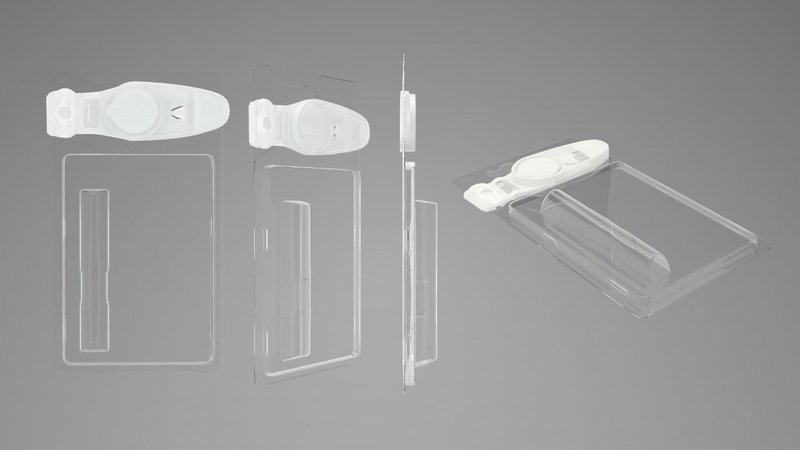
For blister formats, child-resistance is typically achieved through a push-through resistance mechanism. The foil or film backing requires more force to puncture than a child can reliably apply. Some formats add a peel-before-push step that increases resistance further. Both approaches can meet the CPSC standard when materials and construction are specified correctly.
Ask your packaging supplier for certification documentation before placing an order. Cannaline's child-resistant blister packaging is CPSC tested and certified.
Opacity Requirements for Edibles
Most U.S. cannabis markets require edibles packaging to be fully opaque. The requirement prevents minors from seeing the contents and distinguishes cannabis edibles from conventional food products at retail. A blister card with a clear film front face does not meet this requirement in most jurisdictions.
Cannaline's blister card inserts use two-sided printing on double paper blisters. That satisfies opacity requirements while providing printable surface area on both faces of the card. Brands have room to include required warnings, dosing information, brand elements, and compliance copy without crowding the layout.
Tamper-Evidence in Blister Formats
Tamper-evident packaging is required alongside child-resistance in many state cannabis markets. Blister packaging is inherently tamper-evident at the unit level. Once a blister cavity is opened, it cannot be resealed to its original condition. That visible change gives consumers and regulators a clear indicator of whether the product has been accessed.
For full-package tamper-evidence, blister cards are often sealed inside a secondary outer box with a tamper-evident closure or shrink band. Manufacturers can configure Cannaline's custom boxes with tamper-evident features to complete the compliance package.
Material Options and Thickness
Blister packaging materials affect both compliance performance and consumer experience. Polyethylene terephthalate (PET) is the standard material for the blister cavity. It is a Recycle 1 material and produces a crystal-clear cavity that displays the product before opening. Polyvinyl chloride (PVC) is an alternative with slightly different forming characteristics.
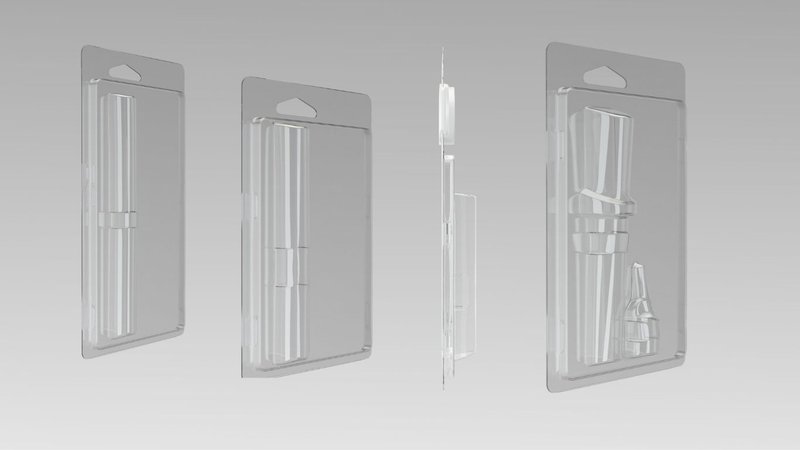
Cannaline's blister units run 20 percent thicker than standard competitive units. Thicker material reduces cracking risk during shipping and handling. That matters for brands distributing across multiple markets or through third-party logistics providers.
Low MOQ for New Edibles Launches
Edibles lines often launch with multiple SKUs across different dose formats. Committing to large blister packaging volumes before any of them prove out in market creates inventory risk. Cannaline's minimum order quantity (MOQ) structure supports lower-volume initial runs. Brands can validate product-market fit before scaling packaging orders.
Samples are available before bulk orders. For brands building out an edibles packaging program from scratch, that sample step confirms fit, finish, and compliance performance before committing to a full production run.
For a full range of child-resistant edibles packaging options, browse Cannaline's edibles packaging catalog and request a free quote.